News & Media
Featured
Empathy reshaping mining partnerships into strategic advantage
Monday, March 23, 2026
What's in this article
- a.“We have to move beyond transactional relationships to truly understanding the perspectives of all our stakeholders.”
- 1.From compliance to connection
- 2.A competitive edge in a changing industry
- a.“Empathy could well become mining’s greatest strategic advantage.”
- 3.Embedding empathy into the business
- a.“The challenge is to institutionalise empathy without compromising performance.”
- 4.Rethinking partnerships through perspective
- a.“When you genuinely understand the viewpoint of a community, a regulator or a worker, your decisions change.”
- 5.Aligning with the just transition
- 6.The bottom line
Speaking across engagements and during an interview with MITV, Kumar emphasised that the traditional model of mining partnerships - largely transactional and compliance-driven - is rapidly becoming obsolete in an increasingly complex operating environment.
“We have to move beyond transactional relationships to truly understanding the perspectives of all our stakeholders.”
This shift, he argued, is not philosophical, it is practical. Mining companies today operate within a web of stakeholders that includes host communities, governments, employees, investors and suppliers. Ignoring these perspectives introduces risk; understanding them creates opportunity.
From compliance to connection
Kumar’s “empathy-first” approach reframes how mining companies secure and maintain their social licence to operate. Rather than treating stakeholder engagement as a regulatory requirement, he positions it as a foundation for better decision-making and long-term value creation.
“Empathy has the power to transform decision-making and ultimately improve project outcomes.”
In this context, empathy becomes a tool to anticipate friction points, whether around land access, environmental concerns or labour relations, before they escalate into costly disruptions.
Industry analysts note that this approach is gaining traction as mining jurisdictions become more complex and societal expectations intensify, particularly across Africa and emerging markets.
A competitive edge in a changing industry
Perhaps Kumar’s most striking assertion is that empathy is evolving into a source of competitive advantage.
“Empathy could well become mining’s greatest strategic advantage.”
Companies that embed empathy into leadership and operations are better positioned to:
Build durable, trust-based partnerships
Navigate regulatory and political complexity
Unlock smoother project execution
Strengthen investor confidence through reduced risk
This marks a notable shift in how value is defined in mining, from purely financial and operational metrics to relationship capital and stakeholder alignment.
Embedding empathy into the business
Kumar is equally clear that empathy cannot remain an abstract leadership concept. For it to be effective, it must be embedded into organisational systems and culture.
“The challenge is to institutionalise empathy without compromising performance.”
At Vedanta Zinc International, this translates into aligning strategy, leadership behaviour and performance metrics with a broader goal of shared value creation, ensuring that mining projects deliver benefits not only for shareholders, but for all stakeholders. This approach also ties into the company’s broader sustainability philosophy, where operational success is measured alongside social and environmental outcomes.
Rethinking partnerships through perspective
A key theme emerging from discussions at Mining Indaba was the idea of reimagining partnerships through perspective-taking, placing decision-makers in the position of those affected by mining operations.
“When you genuinely understand the viewpoint of a community, a regulator or a worker, your decisions change.”
This mindset, he suggested, leads to more inclusive and ultimately more sustainable project outcomes.
Aligning with the just transition
Kumar also linked empathy to one of the mining sector’s defining challenges: delivering a just energy transition. “If the transition is not just, it will not be sustainable,” he said, stressing the need to put people at the centre of resource development. In this framing, empathy becomes critical to ensuring that mining contributes to shared prosperity, rather than exacerbating inequality.
The bottom line
Kumar’s message to the industry is unambiguous: the future of mining partnerships will be defined not just by contracts, but by understanding. As stakeholder expectations rise and operating environments grow more complex, companies that lead with empathy, while maintaining discipline and performance, are likely to emerge as the industry’s long-term winners.
Market News
Related articles
.webp?language=en)
Articles
Tuesday, October 6, 2026
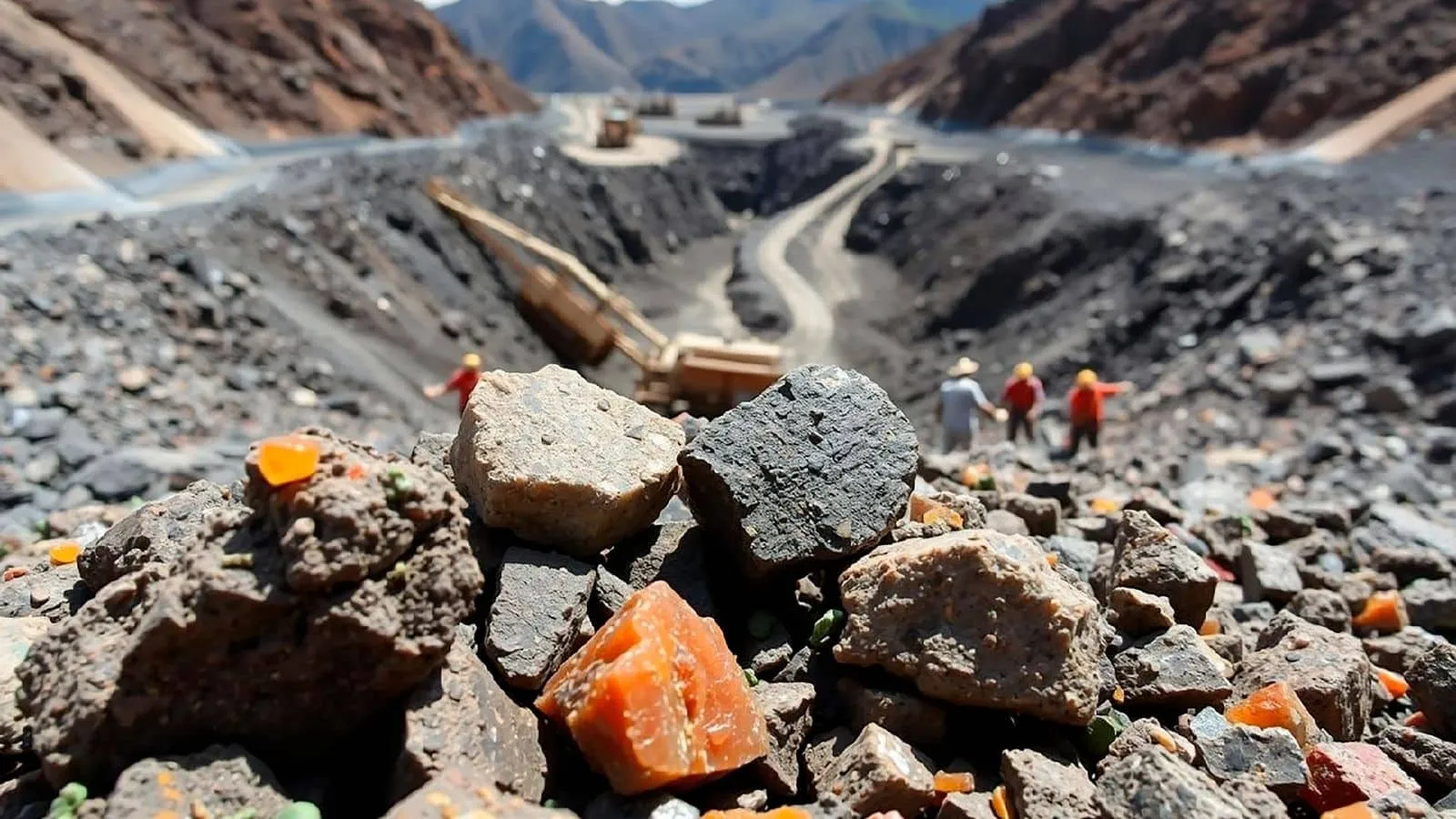
Gabon’s Milingui iron project moves towards production
After decades of waiting, construction activity is giving new momentum to one of Gabon’s largest iron-ore opportunities.
Articles
Tuesday, October 6, 2026
Africa’s critical minerals: The opportunity of a generation
Geopolitics is fundamentally reshaping the global economy, and nowhere is that shift creating greater challenges - and greater opportunities - than in Africa.
.webp?language=en)
Articles
Monday, October 5, 2026
A new partnership for the DRC’s critical minerals future
What does the Buenassa Deal signal for the DRC’s critical minerals strategy?







-ltd-a325b1d3-6414-476b-9b7e-20c2285d5a51.webp?language=en)

-Primary-Logo.webp?language=en)