News & Media
Featured
Egypt targets mining growth with Turkish gold exploration partnership
Wednesday, May 27, 2026
What's in this article
Egypt has taken another step in its bid to position itself as a regional mining powerhouse after signing a new gold exploration agreement with Turkish firm OZ Mining, underscoring intensifying competition across Africa and the Middle East to secure investment in strategic mineral resources.
The memorandum of understanding, signed in Cairo under the supervision of Karim Badawi, will see Egyptian and Turkish technical teams jointly evaluate gold deposits and associated minerals in Egypt’s Eastern Desert - a region increasingly viewed as one of the country’s most promising untapped mining frontiers. The agreement was concluded between the Egyptian Mineral Resources and Mining Industries Authority and OZ Mining at the authority’s headquarters in Cairo. Geologist Yasser Ramadan signed on behalf of Egypt, while OZ Mining chief executive Tanner Yelms represented the Turkish company.
Egypt accelerates mining reforms
The latest deal forms part of Cairo’s broader strategy to diversify the economy, reduce reliance on hydrocarbons and unlock new foreign currency revenue streams as economic pressures continue to weigh on the country. Speaking after the signing ceremony, Badawi described Egypt’s mineral endowment as “a real treasure” and reaffirmed the government’s commitment to supporting international investors entering the sector.
“We will provide the necessary support to accelerate cooperation and exploration activities during the coming phase,” Badawi said, while expressing optimism about OZ Mining’s expansion plans in Egypt. The agreement follows a series of meetings and technical engagements held in Turkey between Egyptian officials and company representatives aimed at identifying long-term mining opportunities and building cooperation frameworks. Yelms said OZ Mining planned to leverage Egypt’s increasingly competitive mining investment environment and recent incentive measures. “Egypt is creating an attractive climate for mining investment,” Yelms said, noting the company’s intention to expand its presence in the country.
Eastern Desert emerges as strategic exploration hotspot
Egypt’s Eastern Desert has become central to the government’s mining ambitions because of its geological links to the Arabian-Nubian Shield, one of the world’s most prospective gold-bearing regions stretching across northeast Africa and the Arabian Peninsula.
The region hosts the flagship Sukari Mine - Egypt’s largest and most productive gold operation - which has helped reignite global investor interest in the country’s mining potential. Major international mining groups including Barrick Gold, AngloGold Ashanti and Centamin have also expanded their focus on Egypt in recent years as authorities overhaul regulations and licensing systems designed to attract foreign capital. Industry analysts say Egypt’s reforms represent one of the most significant shifts in the country’s mining policy in decades. The government has revised concession frameworks, modernised tender systems and introduced investor-friendly measures aimed at aligning Egypt more closely with international mining standards.
Regional race for mineral investment intensifies
The agreement comes amid growing competition among African and Middle Eastern governments seeking to capitalise on rising global demand for gold and critical minerals linked to energy transition technologies, infrastructure development and geopolitical supply chain diversification. Countries across the region are increasingly positioning mining as a strategic pillar of economic development, with governments pursuing partnerships with international miners, financiers and exploration firms to unlock underdeveloped mineral basins.
For Egypt, attracting foreign mining investment has become a key component of broader economic reform efforts as the government seeks to strengthen export revenues, create jobs and establish the country as a regional minerals processing and exploration hub. OZ Mining, which operates across Turkey, Africa and Latin America, focuses primarily on gold, silver and other strategic minerals, adding further international momentum to Egypt’s rapidly evolving mining sector.
RELATED:
Market News
Related articles
.webp?language=en)
Articles
Tuesday, October 6, 2026
Gabon’s Milingui iron project moves towards production
After decades of waiting, construction activity is giving new momentum to one of Gabon’s largest iron-ore opportunities.
Articles
Tuesday, October 6, 2026
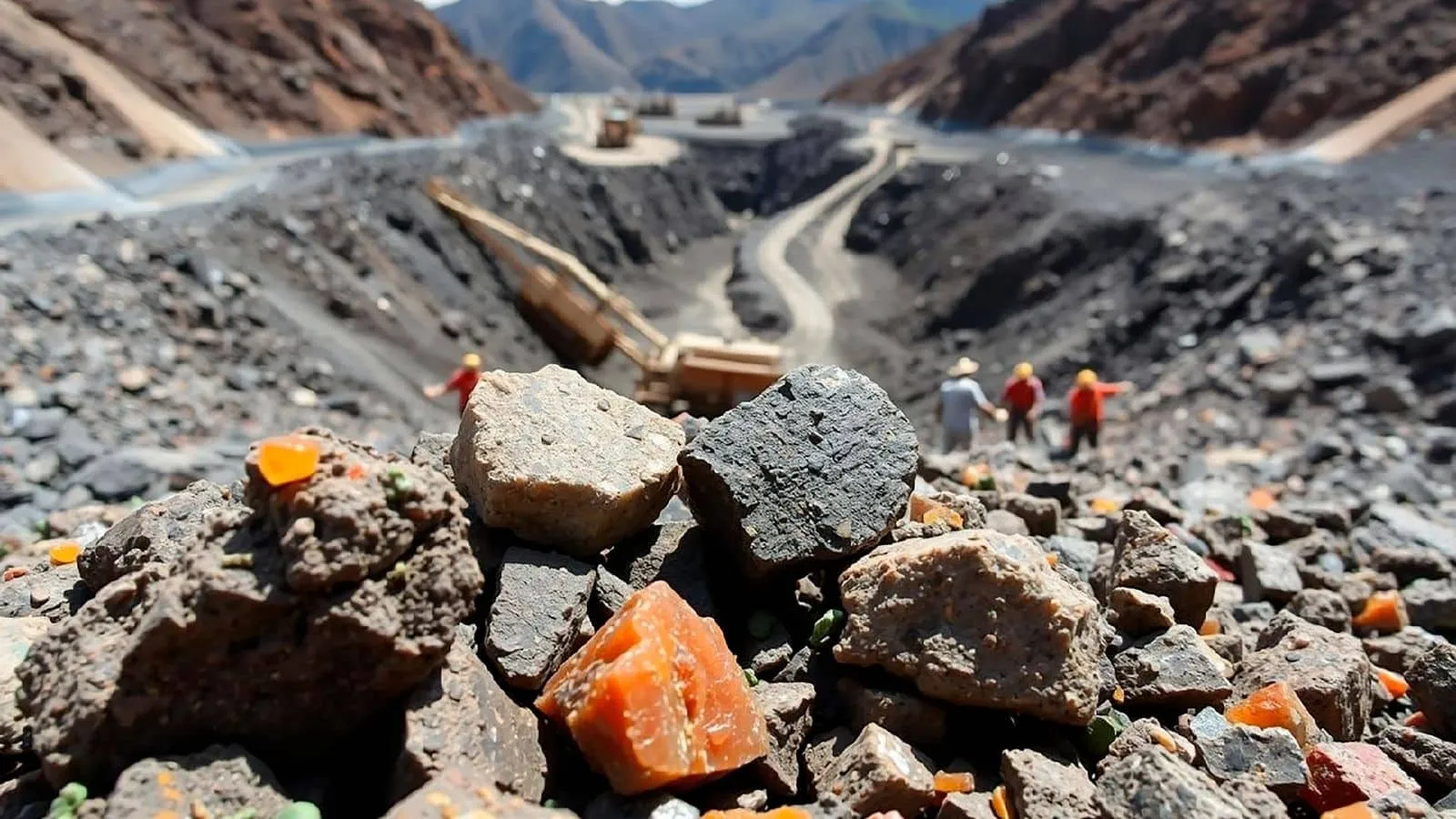
Africa’s critical minerals: The opportunity of a generation
Geopolitics is fundamentally reshaping the global economy, and nowhere is that shift creating greater challenges - and greater opportunities - than in Africa.
.webp?language=en)
Articles
Monday, October 5, 2026
A new partnership for the DRC’s critical minerals future
What does the Buenassa Deal signal for the DRC’s critical minerals strategy?






-ltd-a325b1d3-6414-476b-9b7e-20c2285d5a51.webp?language=en)

-Primary-Logo.webp?language=en)