News & Media
Featured
Africa must democratise access to innovation
Bongi Ntsoelengoe
Friday, October 17, 2025
What's in this article
Without intentional strategies to include smaller players, the benefits of innovation will continue to bypass much of the sector. The time to ensure no one is excluded from Africa’s mining technology revolution is now.
The shift is accelerating across the continent, as digital technologies such as AI, automation, blockchain, and real-time monitoring become central to mining operations. Yet, while larger companies surge ahead with innovation, many smaller mining businesses – including women-owned operations and emerging enterprises – remain at risk of being left behind.
This challenge was brought into sharp focus during the 2025 Investing in African Mining Indaba in Cape Town, where stakeholders across the value chain emphasized the need for ethical, traceable, and tech-enabled mineral production. A clear message emerged: technology must drive inclusive, sustainable growth, particularly as global industries increasingly demand responsibly sourced critical minerals.
Africa may hold a significant share of the world’s mineral wealth, but much of its mining economy remains underdeveloped and disconnected from digital systems. Many small and mid-sized operations still function manually, lacking access to modern tools or data-driven systems that could improve safety, reduce costs, and ensure compliance with environmental standards. For these companies, the shift to smart mining is not just about investment, it is about access.
If mining is to be a true economic multiplier for Africa, local tech entrepreneurs, researchers, and startups must be supported to create solutions tailored to the continent’s unique realities. This means developing technologies that are affordable, adaptable, and resilient in areas with weak infrastructure. Low-cost modular systems, mobile-friendly applications, and cloud-based platforms can help level the playing field for smaller operators.
Public-private partnerships are already proving their potential. In South Africa, initiatives linked to the Mandela Mining Precinct are co-developing technologies that address local challenges through practical, inclusive solutions designed to support junior miners and small-scale operators. These
projects range from smart beneficiation tools and remote monitoring platforms to digital safety systems for smaller processing plants. Importantly, such tools must not remain locked within pilot projects. They should be democratized, enabling access for all and creating shared spaces where junior miners, software startups, and university researchers can collaborate across borders. Training and skills development are equally critical.
Advanced technology alone cannot transform the sector without a workforce equipped to use it. The future of African mining depends on educating the next generation in digital skills - from coding and data science to automation and AI - and creating pathways for women, youth, and entrepreneurs to enter and thrive in a fast-changing mining economy. Meaningful inclusion is not simply about fairness. When smaller miners operate safely, efficiently, and transparently, the competitiveness of the entire industry improves.
Empowering these miners also builds trust with international buyers who demand supply chain traceability and compliance with ESG standards. Digital traceability systems are already being tested across Africa, using blockchain to verify mineral origins and ensure ethical sourcing. Real-time ESG dashboards and virtual training tools are also advancing mine planning, monitoring, and workforce safety. Without deliberate strategies to extend these benefits to smaller players, however, large segments of the industry risk exclusion from the digital economy.
Looking ahead to 2026, the Investing in African Mining Indaba will again place technology at the centre of its agenda. The Tech & Innovation Stage will showcase scalable solutions, foster cross-border collaboration, and highlight African-led innovation through local startups and digital policy dialogue. Mining Indaba offers a powerful springboard for collaboration - an opportunity to align around a shared vision that places people and purpose at the heart of digital transformation.
As Africa’s mining sector moves deeper into the digital era, the question is no longer whether technology will be adopted, but who it will serve. Africa cannot afford a two-speed mining economy. Everyone - large and small, established and emerging, urban and rural - must have a seat at the table if the continent is to unlock the full value of its mineral wealth in a way that benefits all.
This article was originally published in
The Digital Mining Pulse | Issue 2 | September 2025
Market News
Disruptive Technologies
NextGen
Major & Mid-Tier Mining Companies
Mining Service Providers
Investors
Governments
Exploration & Junior Mining Companies
Downstream Buyers
Communities
Related articles
Digital Diaries
Wednesday, November 5, 2025
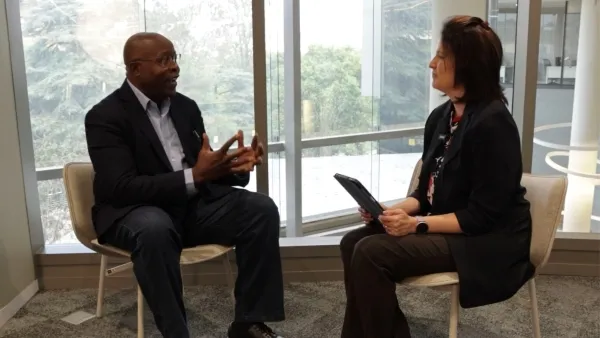
Digital Diary - Ben Magara, CEO of Exxaro Resources
In this exclusive conversation with Ben Magara, CEO of Exxaro Resources, our Product Director, Laura Nicholson, discusses Exxaro’s growth and diversification into manganese and renewable energy.
.webp?language=en)
Articles
Thursday, July 10, 2025
Aramine at 50: Celebrating a Legacy of Innovation, Family, and Global Impact
An interview with Christophe Melkonian, Co-President of Aramine By Natallia Zhuk-Higgs, Key Account Director at Mining Indaba

Wednesday, November 12, 2025
Africa’s Critical Minerals: the decade that will define global power
As the US–China rivalry deepens, Africa’s mineral wealth is emerging as both opportunity and leverage. The next ten years will determine whether the continent remains a source of raw materials - or becomes an industrial power in its own right.






-ltd-a325b1d3-6414-476b-9b7e-20c2285d5a51.webp?language=en)


-Primary-Logo.webp?language=en)