News & Media
Africa’s critical minerals: The opportunity of a generation
Tuesday, October 6, 2026
For decades, mining projects were largely viewed through the lens of supply and demand for commodities, traded in a borderless globalized world and driven by the relentless discipline of prices. Today, considerations of national and economic security increasingly trump pure cost minimization as projects are also assessed for their impact on supply chains and industrial resilience. Since the first Trump administration, the United States has explicitly identified as “critical minerals” certain metals and other materials deemed essential to the country’s economic or national security whose supply chains are vulnerable to disruption; currently 60 mineral commodities and elements are on the list. This year, lamenting the market domination by “single supplier outside the G7 and partner countries” whose “use of non-market policies and practices and economic coercion, including arbitrary export restrictions” underscored the fragility of their own supply chains, America and its G7 partners joined in a pledge to reduce the dependence by quantifiable metrics for the first time.
That geopolitical shift places Africa in an increasingly important strategic position. The continent possesses extraordinary geological endowment, but its opportunity extends well beyond simply supplying raw materials in demand. Africa can become an integral part of secure, integrated mine-to-manufacturing supply chains connecting responsible resource development with processing, infrastructure, logistics and ultimately the advanced industries that underpin modern economies.
For the United States, reindustrialization requires reliable access to the materials that support defense, advanced manufacturing, energy and technology infrastructure. Even across the bitter partisan divide, there is clear bipartisan recognition that America’s national security cannot depend solely on domestic supply and production of required industrial outputs, so we must engage with our international partners and diversified sources of supply.
This creates an historic opportunity for African nations prepared to offer transparent investment frameworks, responsible resource development, and sharing in regional infrastructure projects.
Ivanhoe Atlantic’s strategy is closely aligned with this embedded national security architecture. We believe American-led investment in Africa will unlock world-class resources while creating durable economic partnerships, strengthening supply-chain security, and supporting industrial development on both sides of the Atlantic.
AUTHOR: Ambassador (ret.) J. Peter Pham is Executive Chairman of Ivanhoe Atlantic. Previously, he served as the United States Special Envoy for the Great Lakes and Sahel Regions of Africa
Downstream Buyers
Investors
Market News
Industrialisation
Governance & Policy
Geopolitics
Critical & Strategic Minerals
Related articles

Articles
Wednesday, September 16, 2026
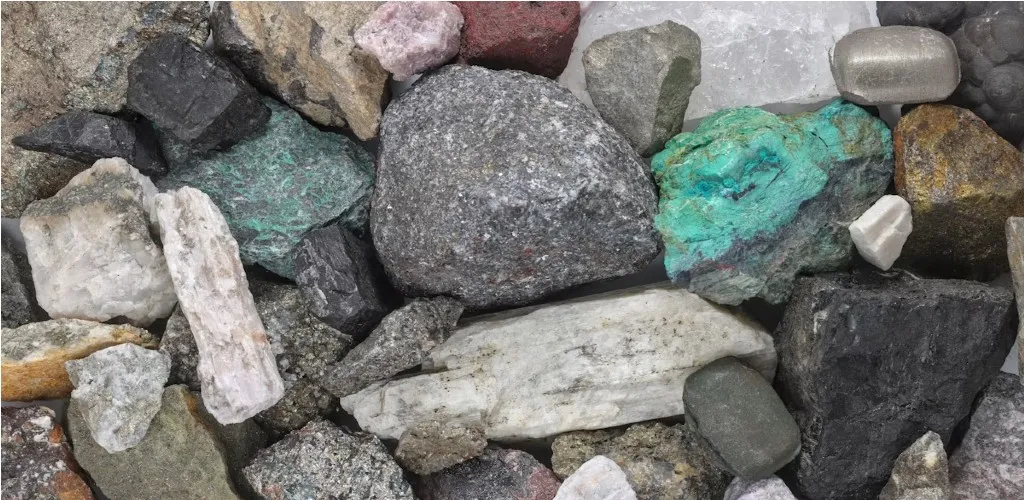
What does Dangote’s refinery mean for Africa’s mining ambitions?
The value of a resource can change dramatically when processing, capital and ownership move closer to the point of production.
Articles
Monday, August 31, 2026
Governments are becoming mining dealmakers in the race for critical minerals
Governments are moving deeper into the mining deal room, shifting from traditional lenders and regulators to investors, customers, price-setters and strategic partners as countries race to secure critical mineral supply chains.
.webp?language=en)
Articles
Thursday, September 17, 2026
What does the BRICS summit mean for Africa’s mining value chains?
The BRICS summit has sharpened the race to secure critical minerals – but for Africa, the bigger opportunity is capturing more of the value created after extraction.












-ltd-a325b1d3-6414-476b-9b7e-20c2285d5a51.webp?language=en)


-Primary-Logo.webp?language=en)